ph: Michela Pedranti
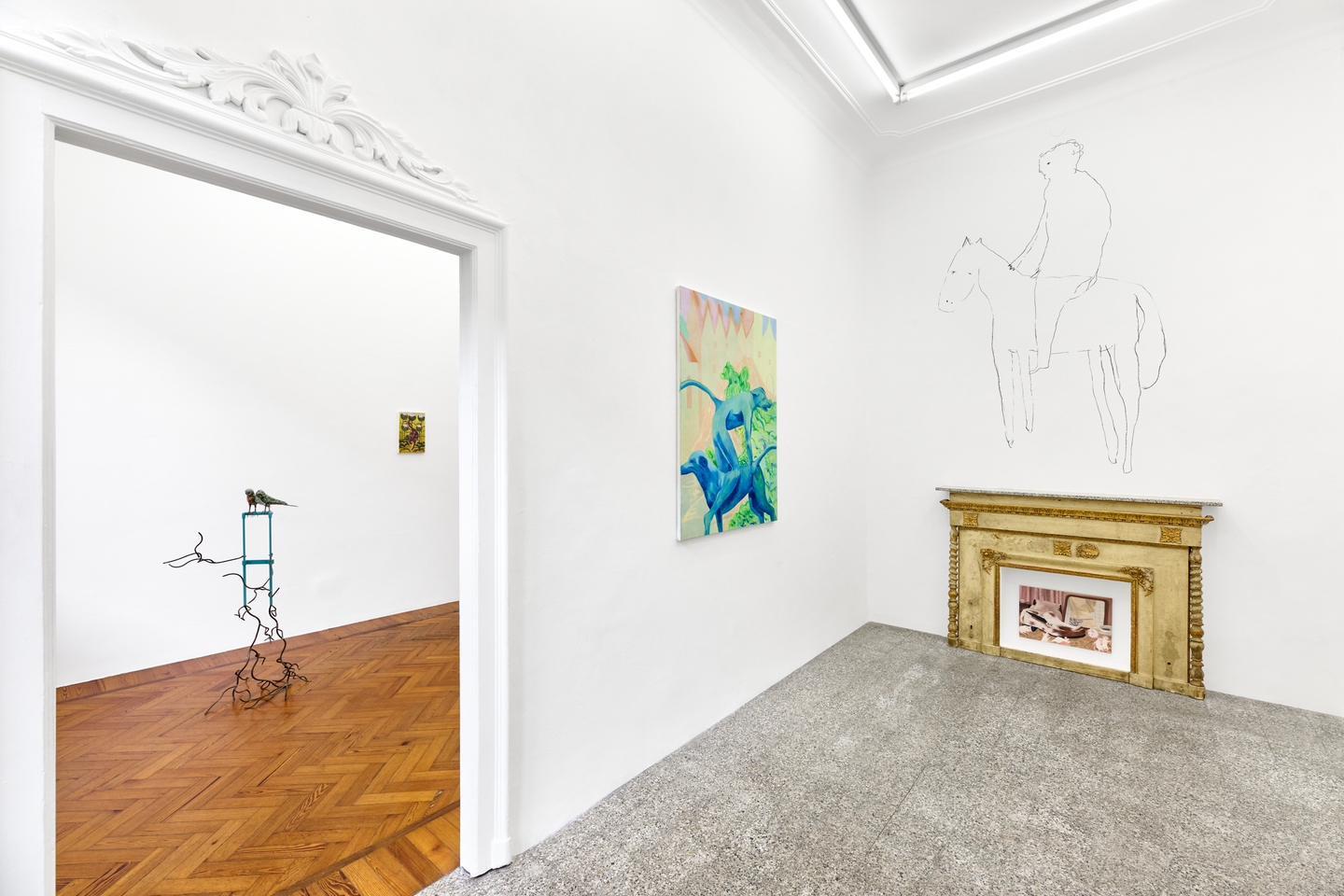
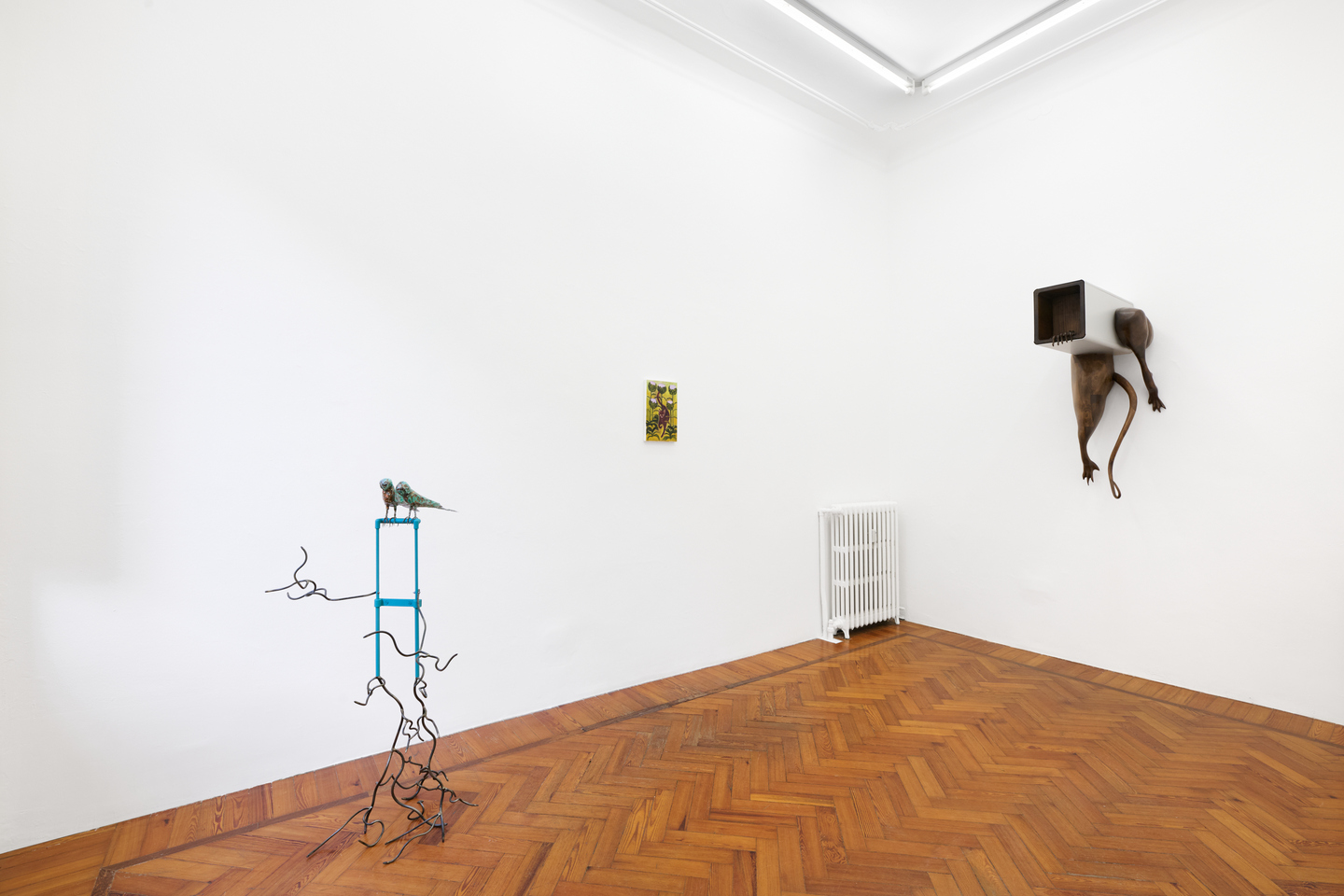
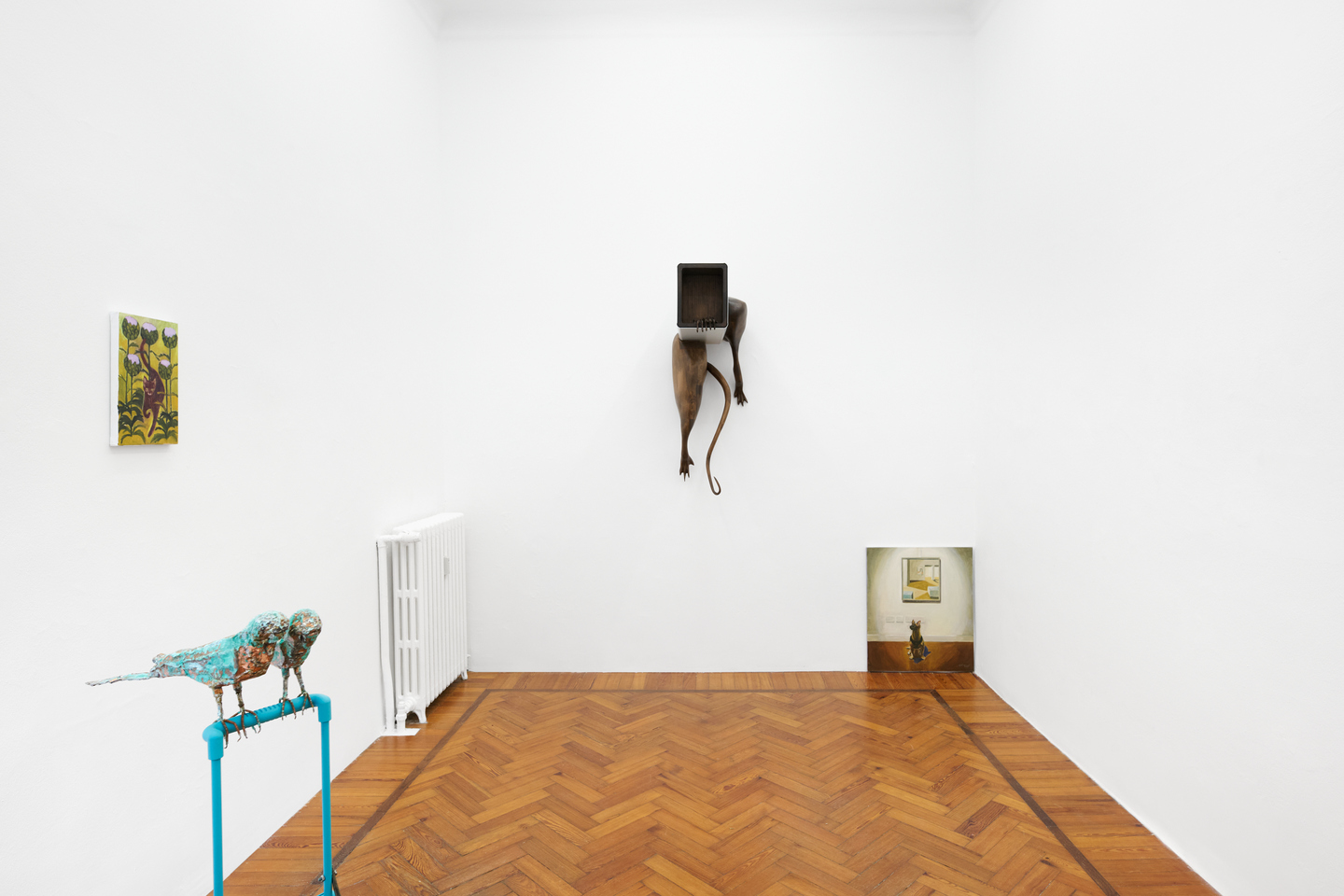
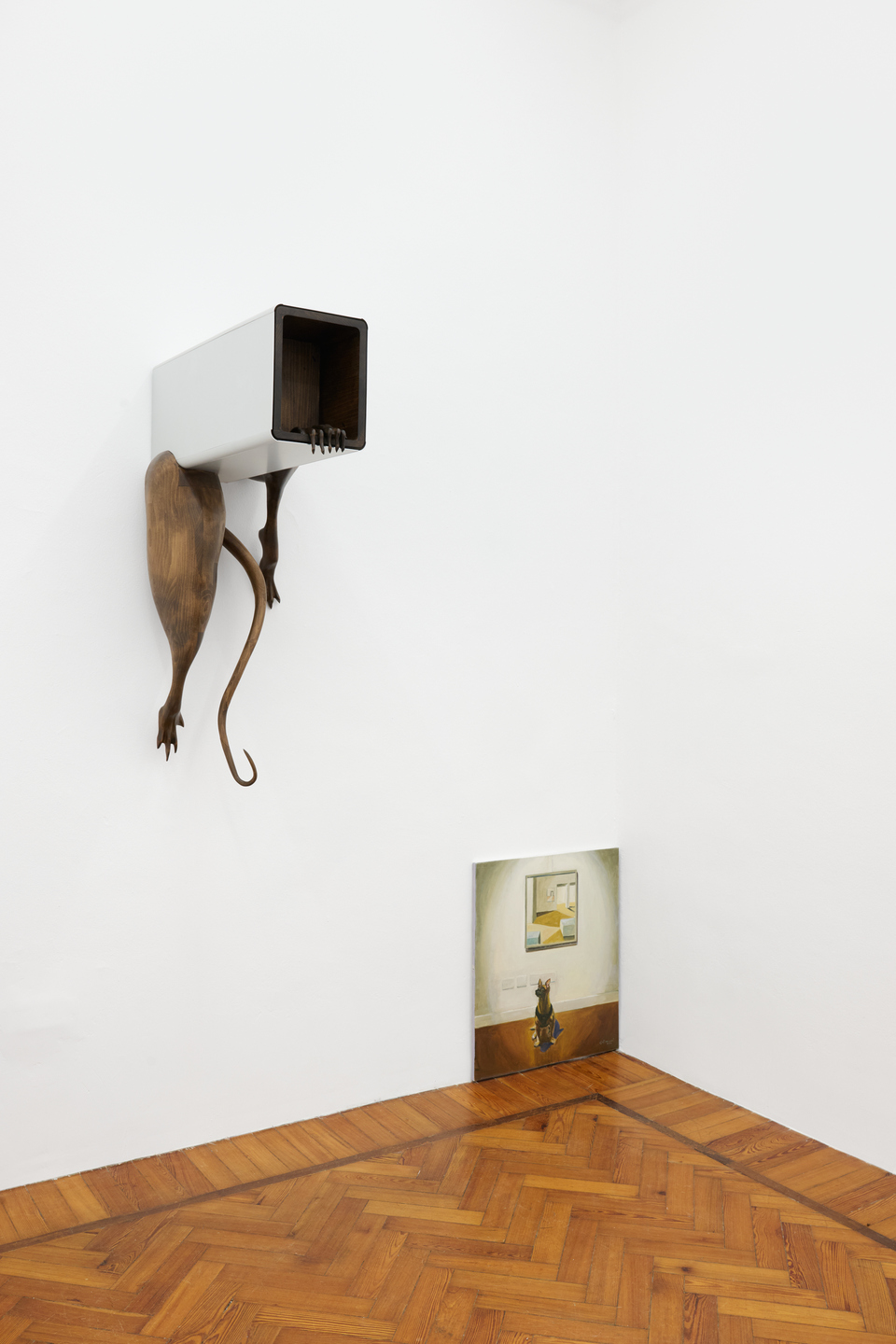
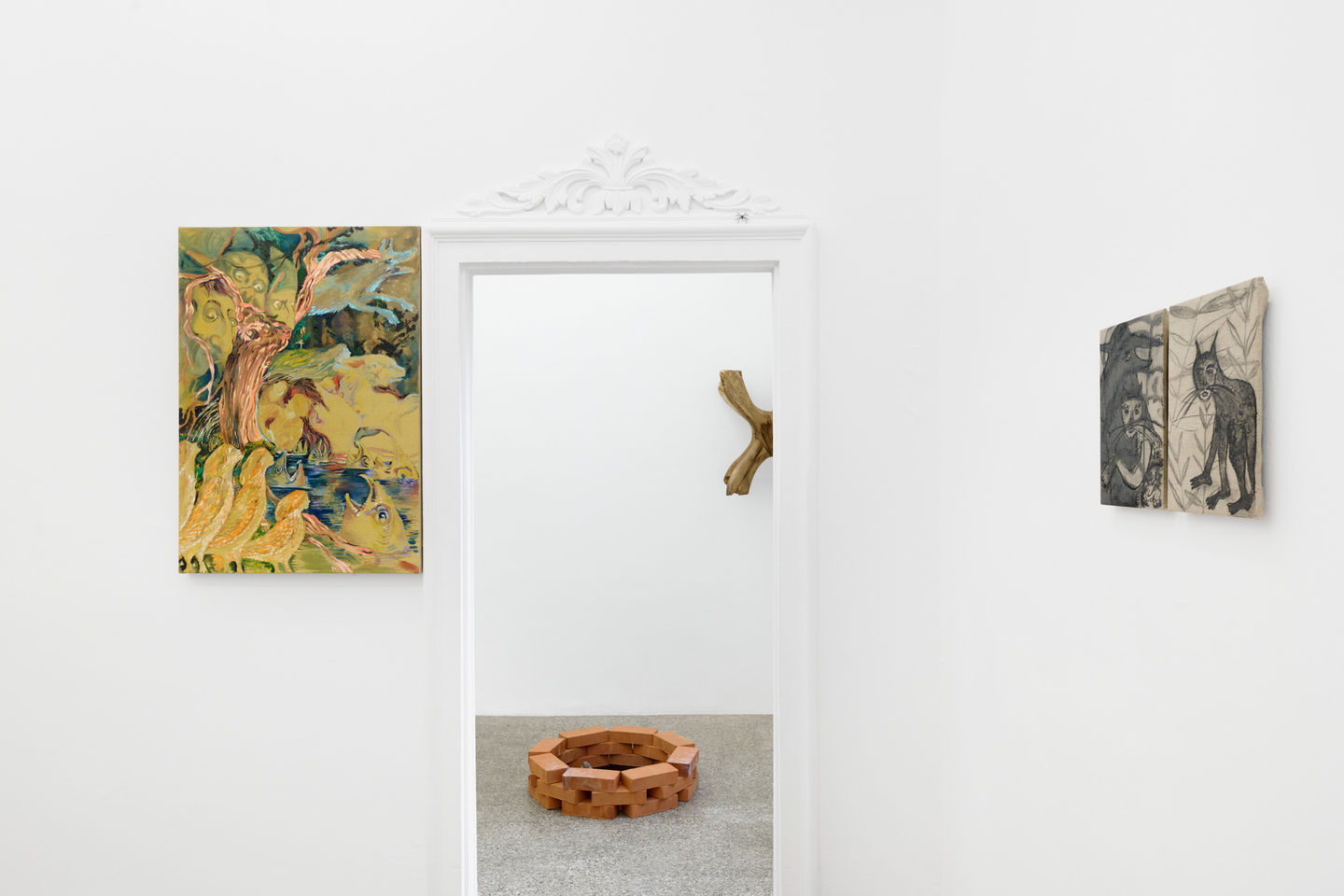
Studiolo è lieto di annunciare la mostra “bestiarium”, collettiva degli artisti Thomas Berra, Anita Dal Sasso, Lucia Leuci, Elisabetta Marino, Maude Maris, Eliott Paquet, Gaetano Tommasi, Romane de Watteville e Sebastiano Zafonte;
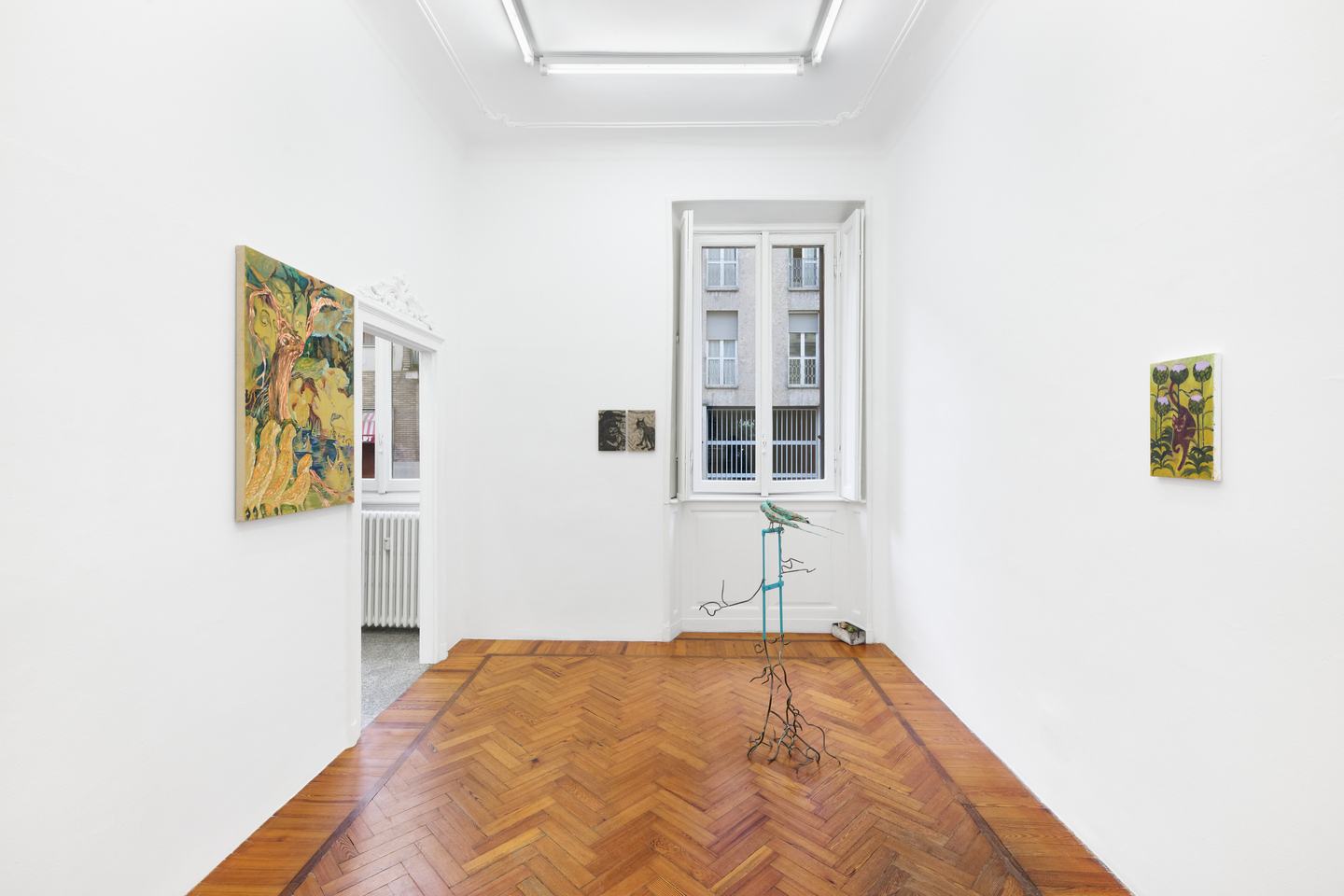
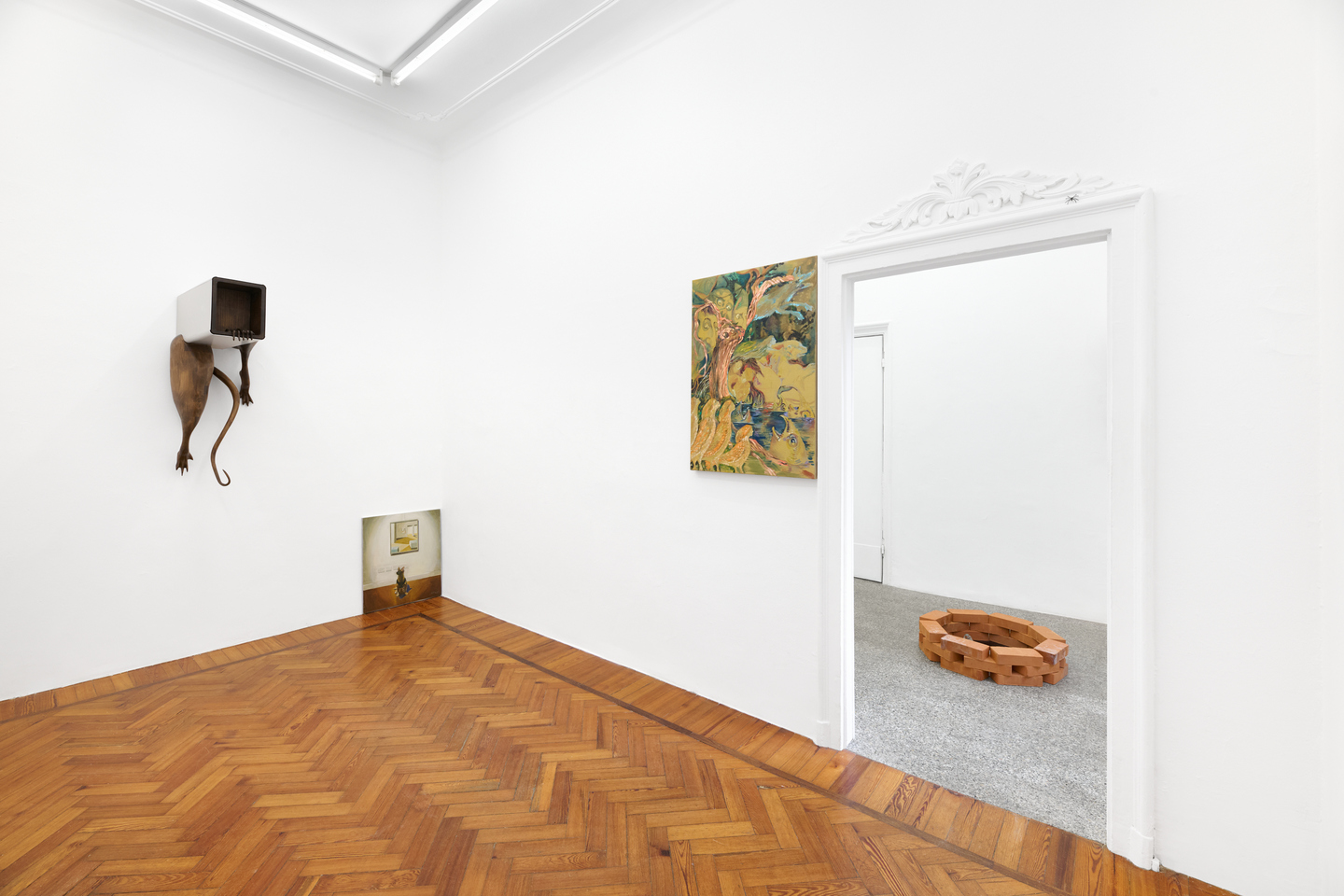
Intrecciando pittura, scultura e disegno, l’esposizione indaga la relazione tra mondo antropico e animale: un legame primigenio di cui l’uomo — dal Paleolitico fino ad oggi, passando attraverso un infinito repertorio di riferimenti pittorici, letterari, musicali e filmici — sente misteriosamente il bisogno di condividere e rappresentare. Realtà e criptozoologia (scienza legata ad animali la cui esistenza è ipotizzata da testimonianze, leggende e indizi) si mischiano, mostrando come l’animale — sia esso corpo vivente o proiezione mitica — diventi non solo il soggetto di una prossimità quotidiana o immaginata ma bensì un complesso “dispositivo” emotivo nel quale si condensano derive di carattere psicologico, simbolico, sogni come bisogni proiettivi; in questi ruoli le creature abbandonano la loro natura biologica per diventare degli alter-ego, metafore, modelli di purezza ai quali, idealmente, congiungersi. In mostra nove coniugazioni contemporanee di questa speciale relazione – nove esempi di come (e del perché), gli artisti, oggi, continuino a considerarli una componente irrinunciabile della propria ricerca:
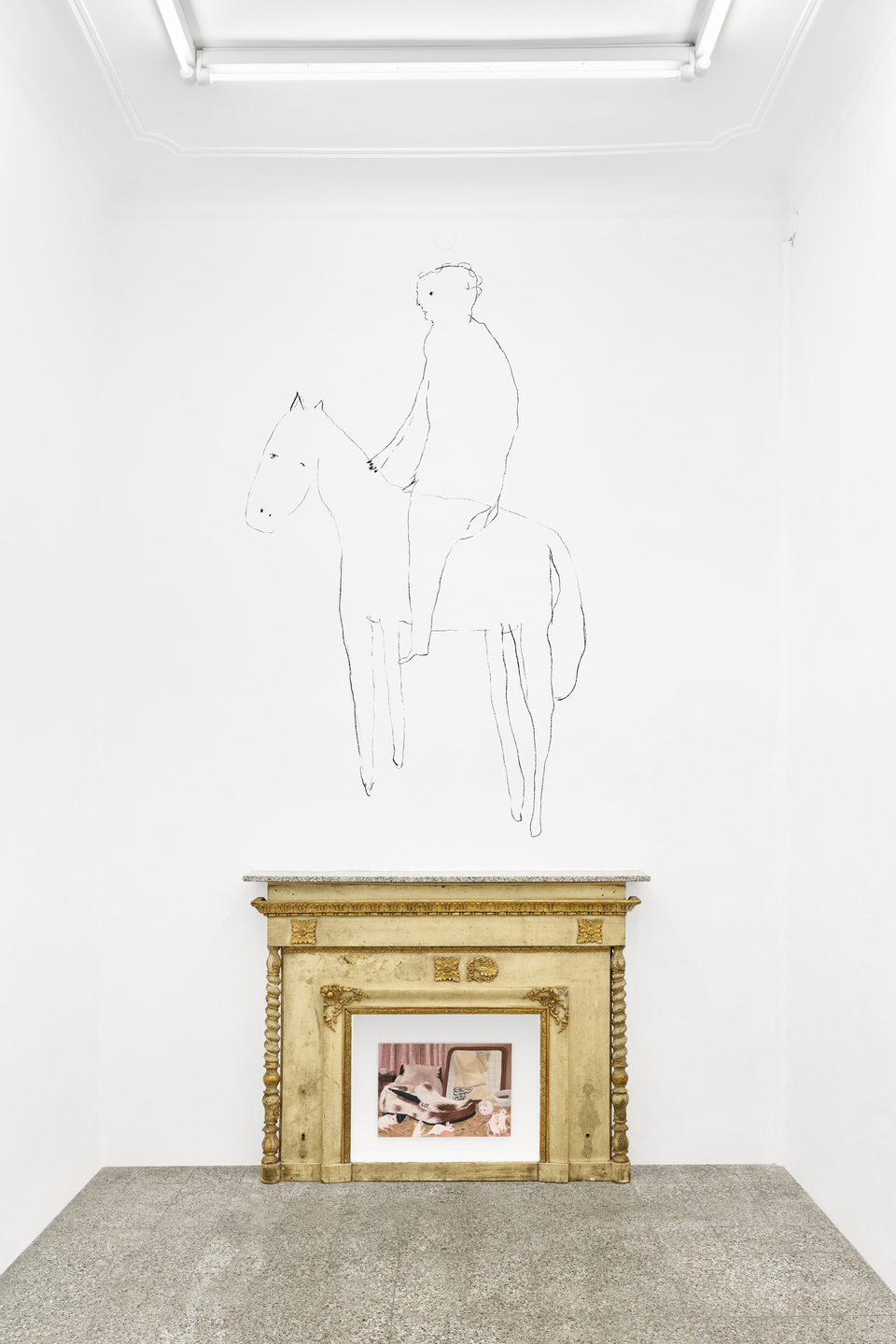
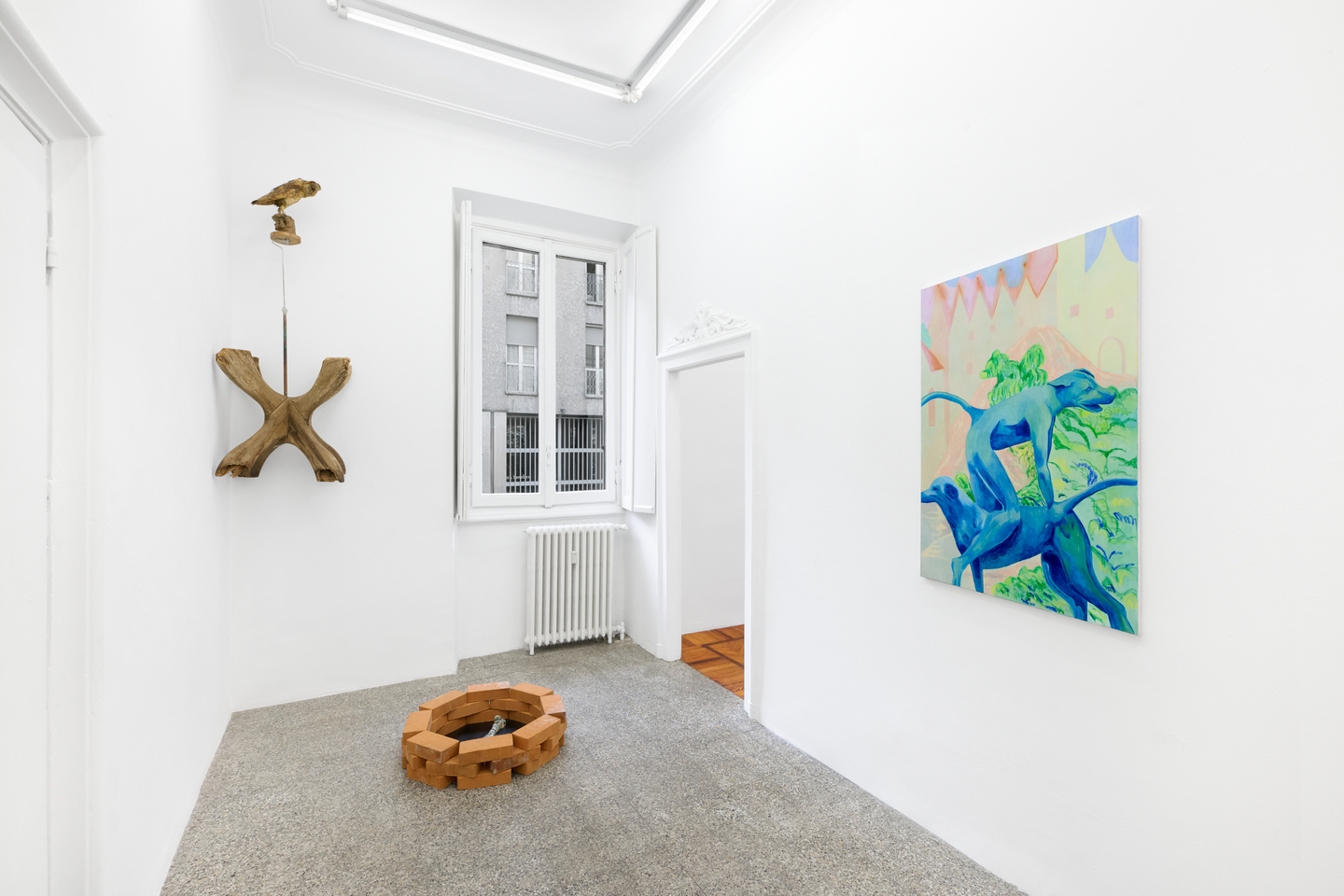
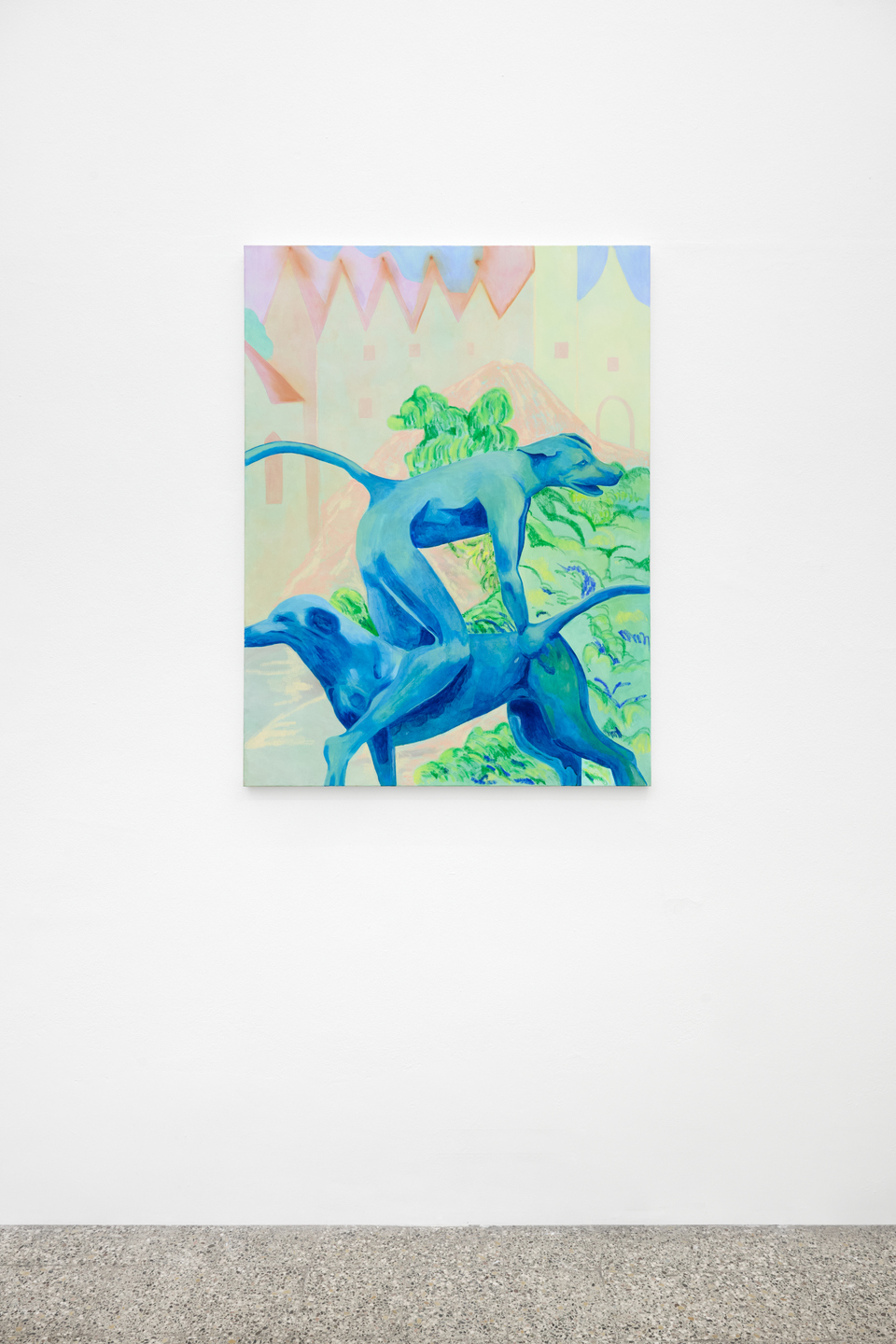
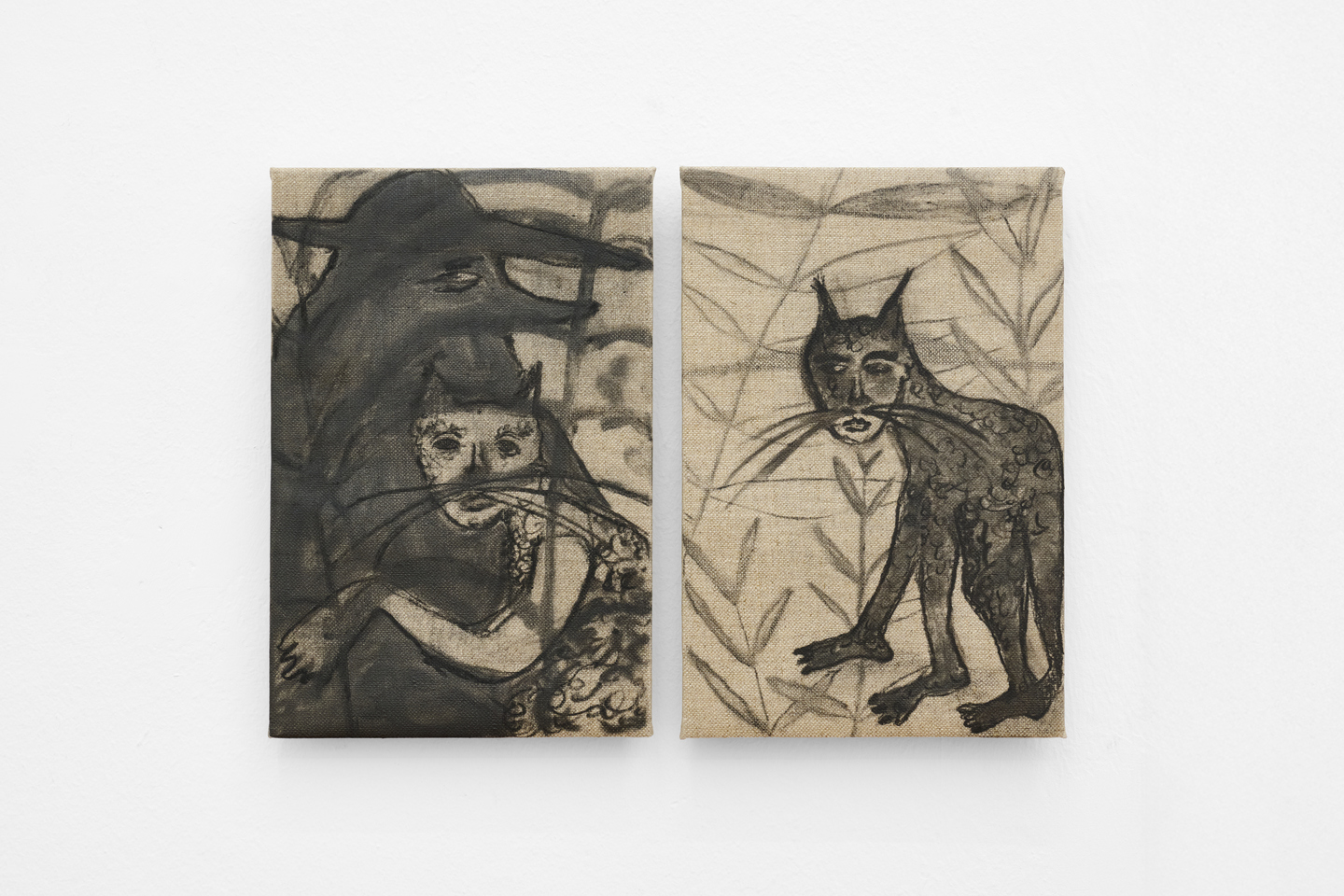
...antropomorfizzandoli come nel caso di Thomas Berra e di Elisabetta Marino, le cui figure in mostra – sia nel caso delle chimere di reminiscenza bizantina del primo, sia nei due cani che giocano ad un tipico gioco dell’infanzia palermitana della seconda – tendono ad una unione formale e sociale tra i due mondi;
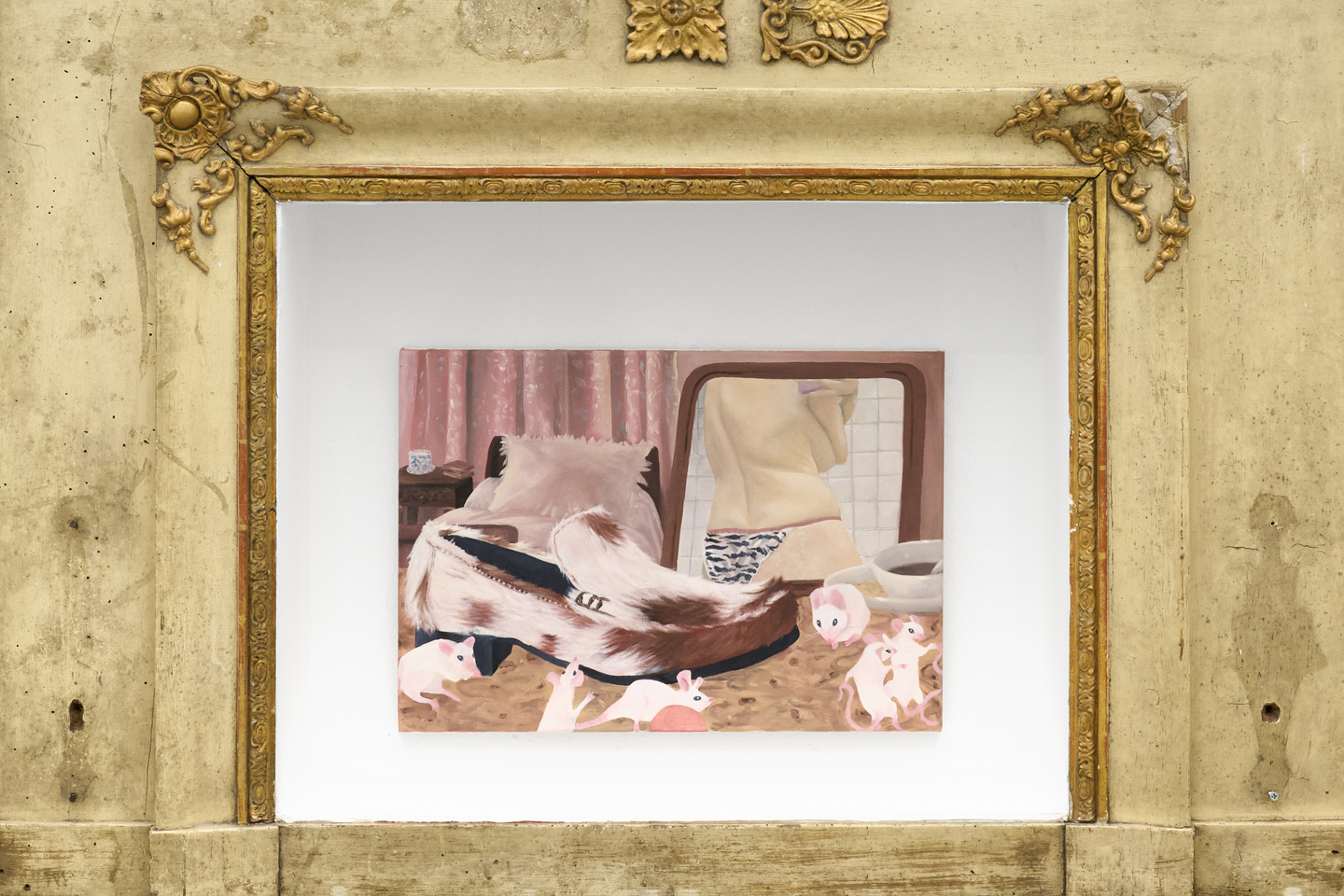
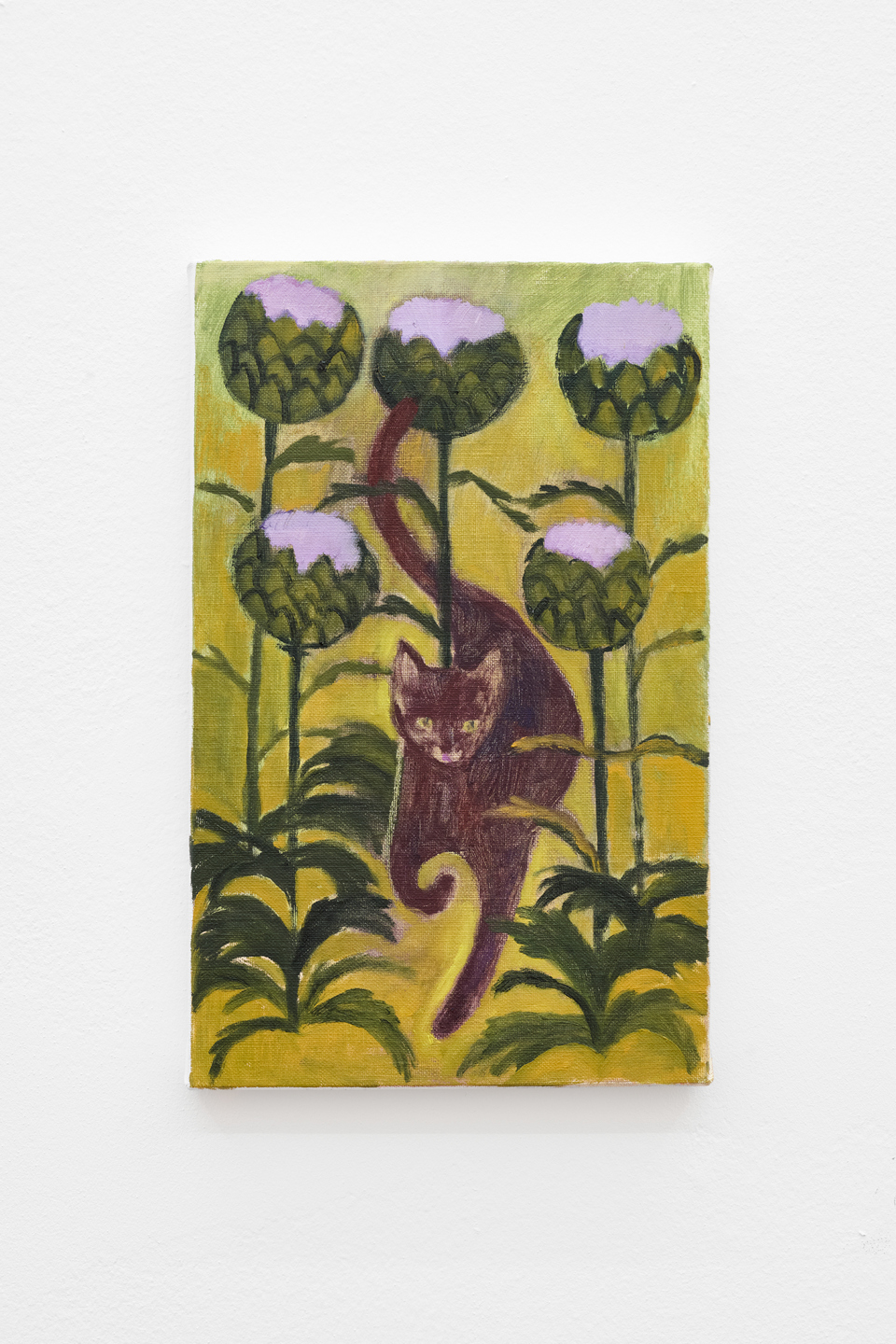
...rendendoli presenze surreali e fiabesche come nei dipinti di Anita Dal Sasso e Romane de Watteville; fondamentali costruttori di narrazioni o frammenti di sé;...ristabilendone una reputazione collettiva come nel caso del topo di Eliott Paquet; da simbolo parassitario e di decadenza a metafora Dostoevskiana di purezza;
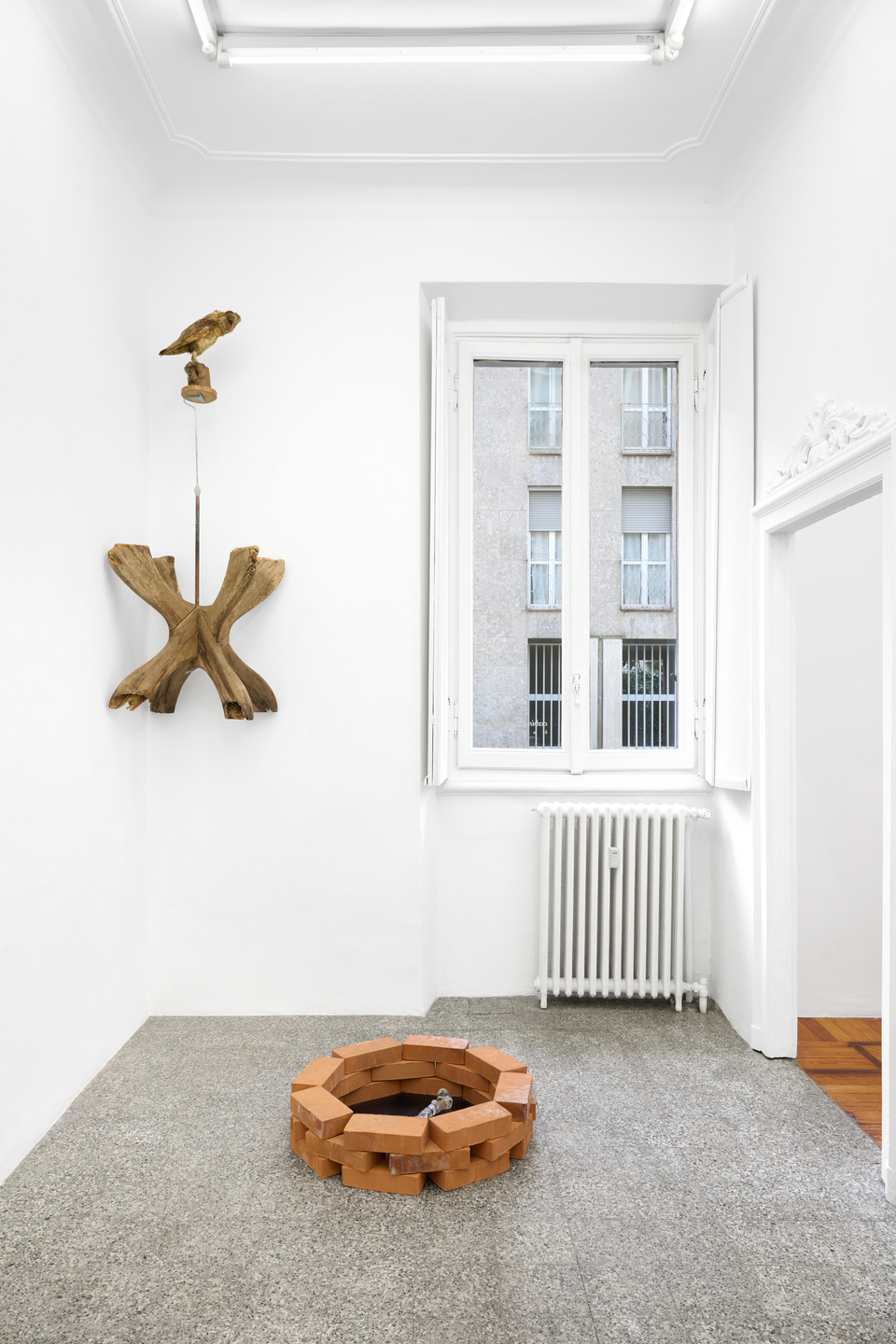
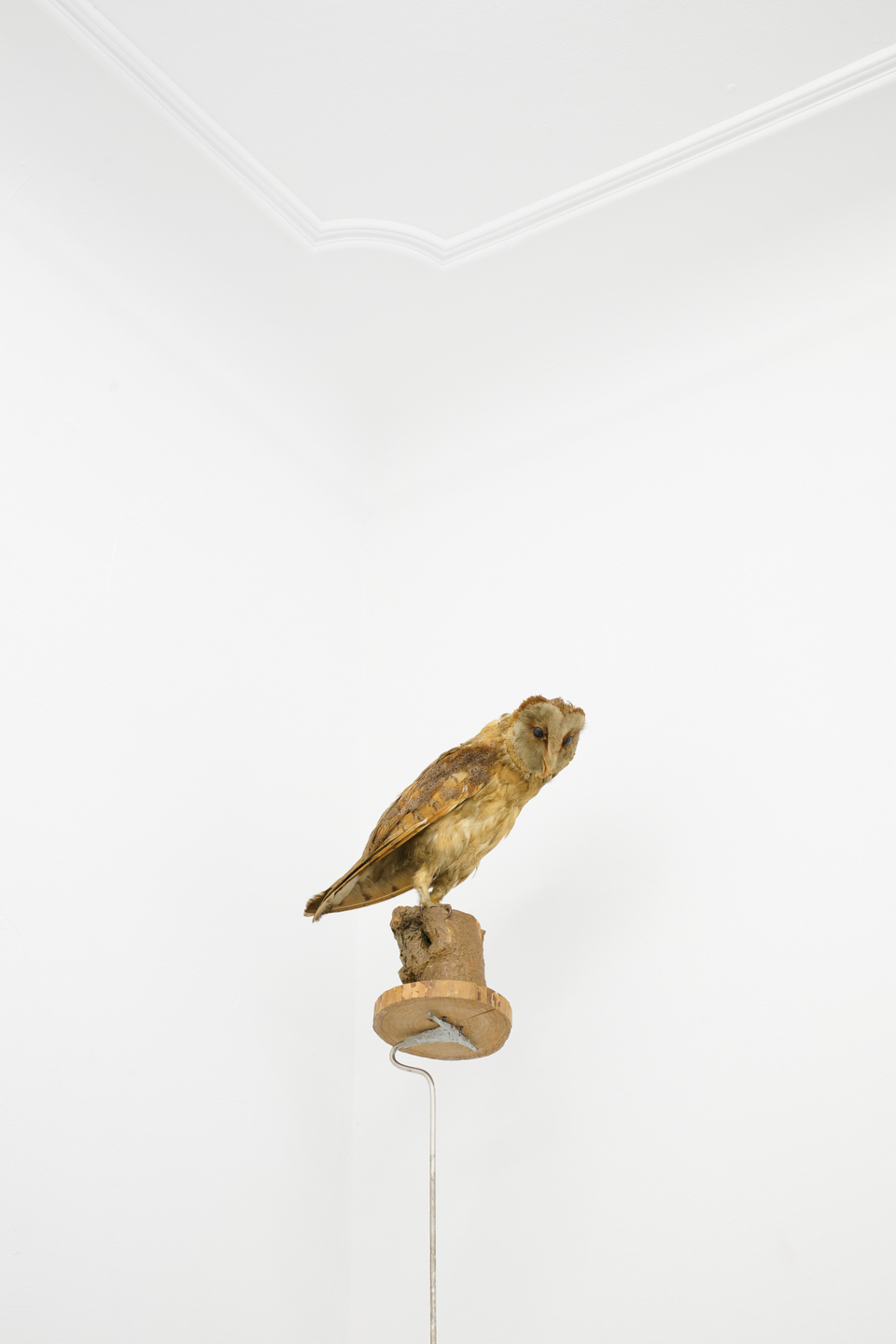
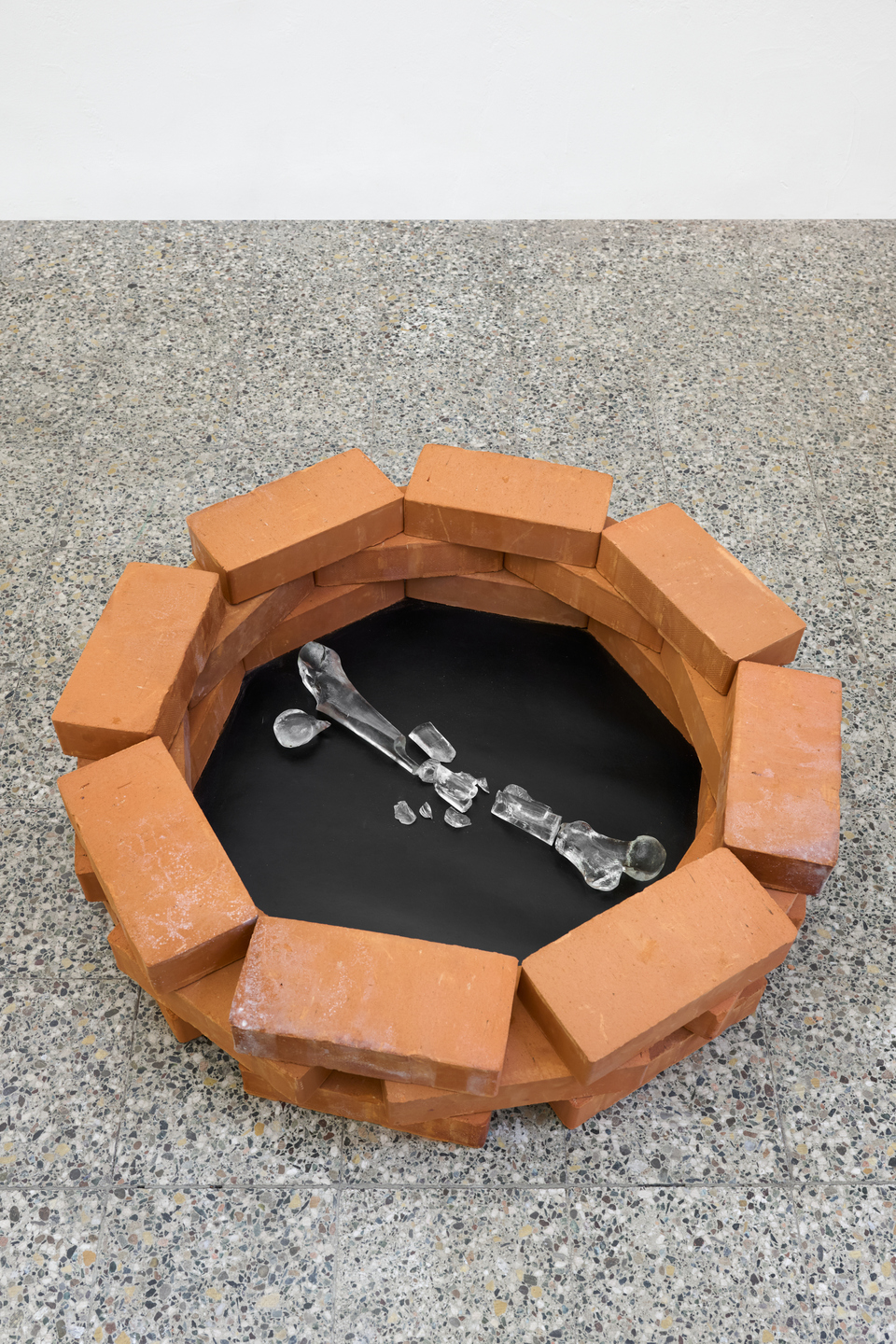
...considerandoli i veri vincitori nella lotta anti-specista; come nel caso dell’opera di Sebastiano Zafonte con il suo barbagianni che, con scherno, osserva i frammenti vitrei di un femore umano (metafora di un’umanità fragile, ormai non più capace di reggere il proprio peso);
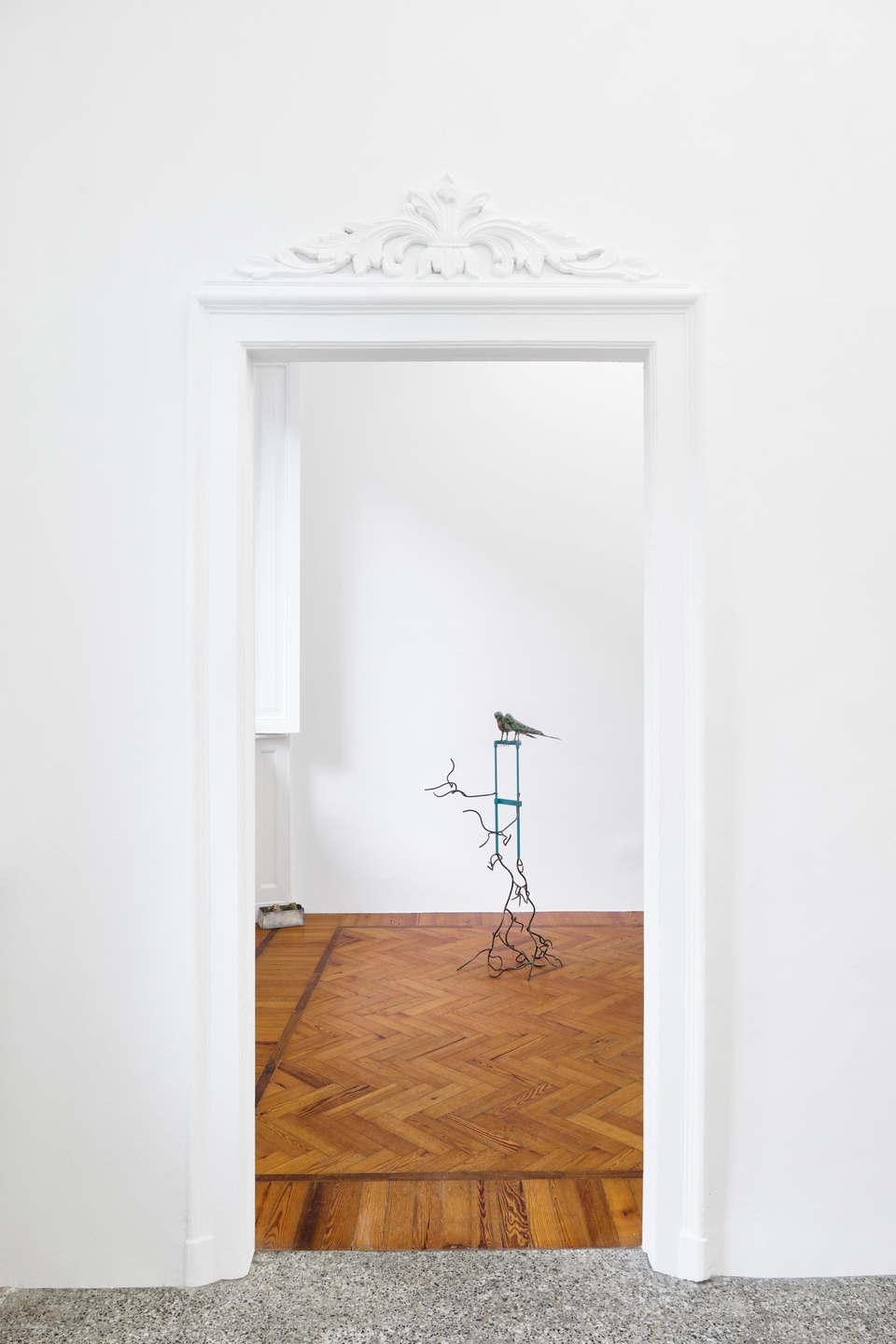
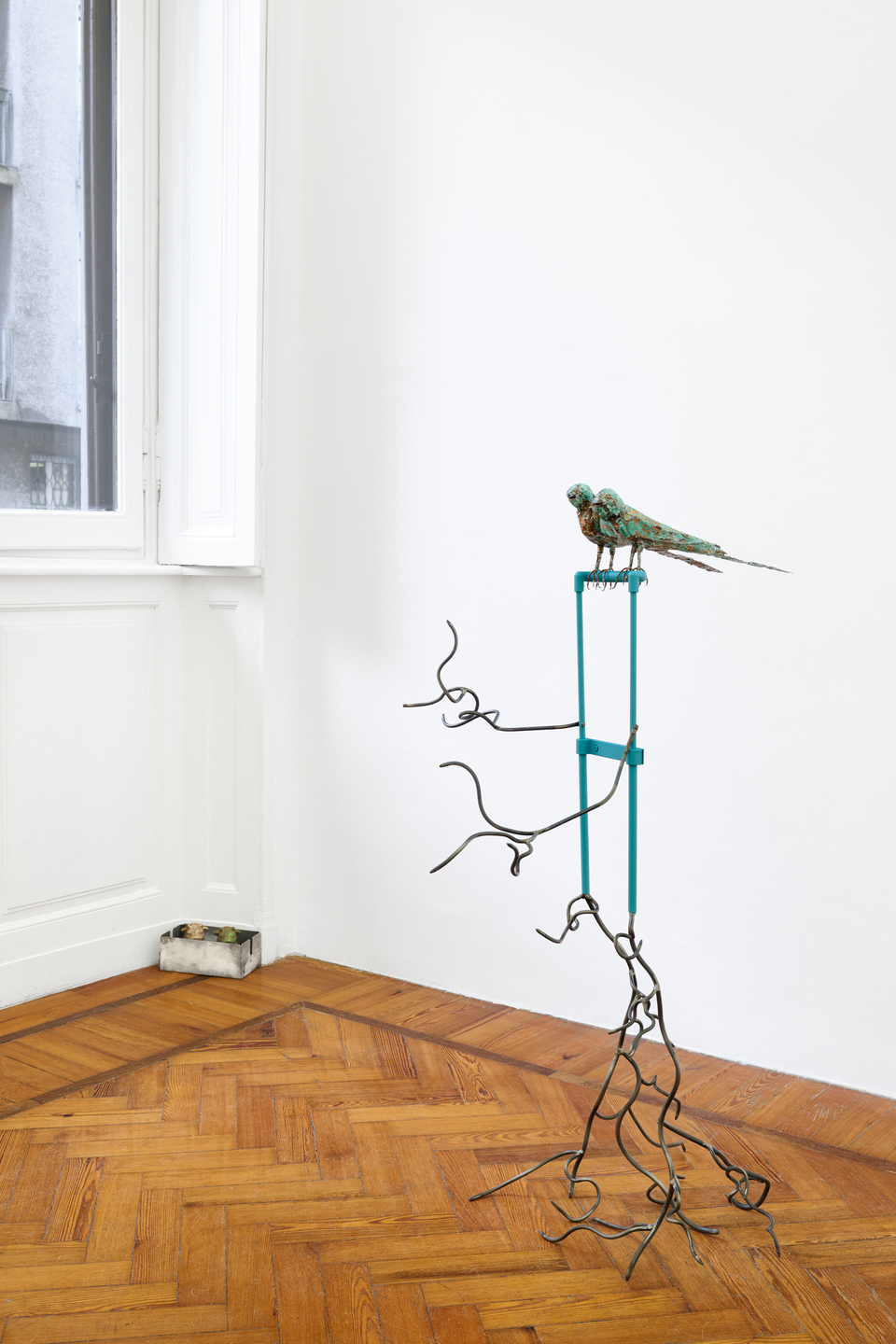
...ponendoli, sentimentalmente e antropologicamente, alla medesima stregua dell’uomo; come quelli di Gaetano Tommasi e Maude Maris o come i due Parrocchetti dal collare di Lucia Leuci che, appollaiati su un immaginario uomo-trolley che passeggia a milano, diventano un tutt’uno, congiungendo le loro storie in una, unica e universale.
Ad ogni artista corrisponde, sempre, un proprio intimo e unico bestiario!
#
Thomas Berra
Il lavoro di Thomas Berra (Milano, 1986) è da sempre indissolubilmente legato alla pittura e al concetto di resistenza; una tematica, quest’ultima, che prima ancora di conquistare i soggetti dei suoi dipinti rappresenta per l’artista un vero e proprio statement di vita: Resistente è la natura che ci circonda, che si rigenera ostinata malgrado le nostre prevaricazioni; Resistente è la presenza, nelle nostre vite, dei sogni e delle immagini che si generano e ci appaiono ogni giorno; Resistente è il suo approccio alla pratica del dipingere, instancabile, quotidiano, compulsivo – una speciale sommatoria che ogni giorno confluisce su tele di piccole o grandissime dimensioni, su carta o supporti di qualsiasi altra natura. Il mondo rappresentato da Berra non è antropocentrico ma bensì ecocentrico, dove l’elemento vegetale – presenza pressoché costante nei suoi lavori – si unisce a scenari mistici, animati da soggetti fiabeschi, da bestie informi, cavalli, chimere ma anche dall'uomo; un tutt'uno inseparabile, romanticamente sospeso in un’atmosfera onirica.
Anita Dal Sasso
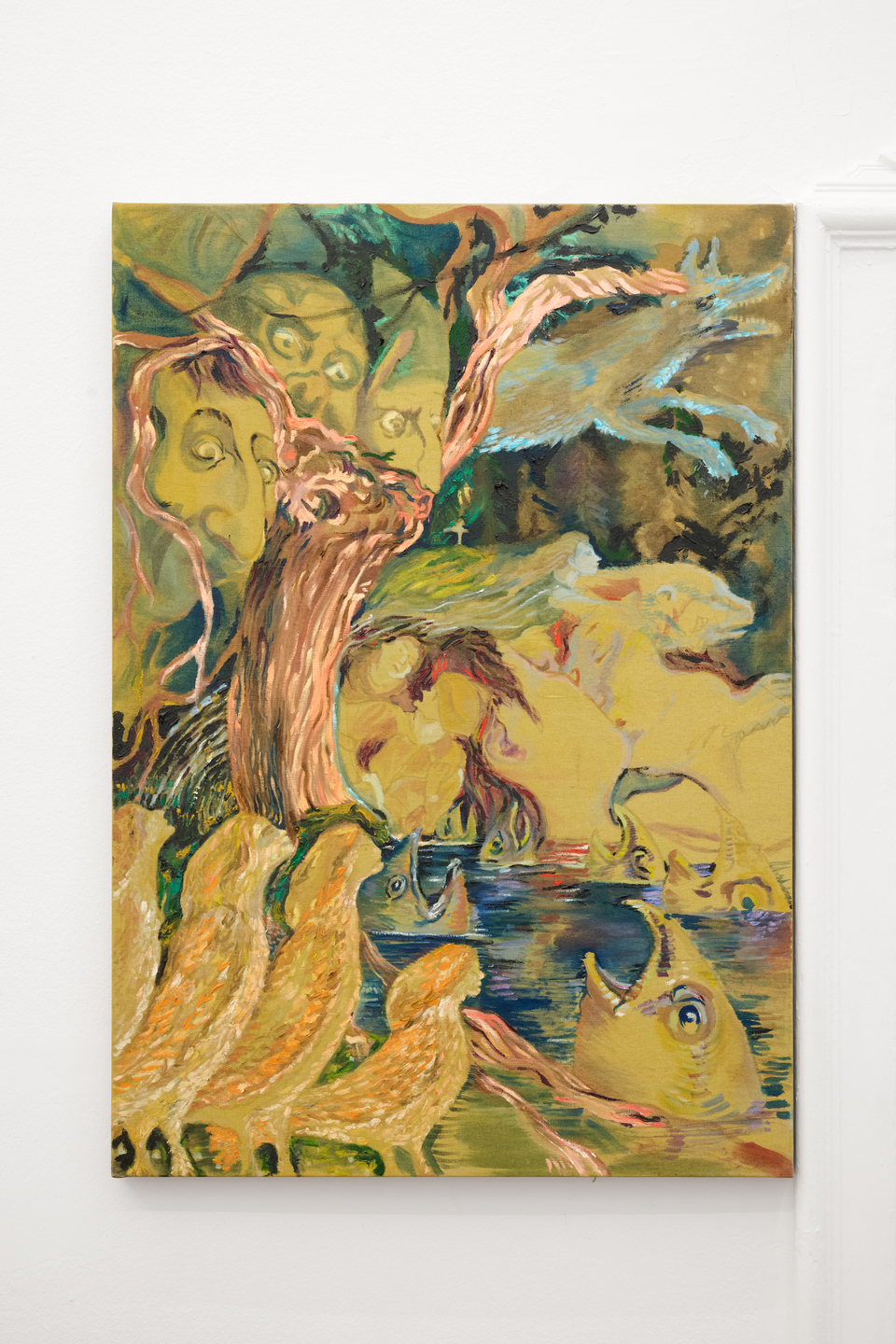
Le opere di Anita Dal Sasso (Roma, 2000) sono dei portali aperti sul caos di un paesaggio interiore; quelle visioni prodotte dalla nostra mente e nutrite dal sogno, dal pensiero, dal mito e dalla tradizione come anche dalla letteratura, la storia dell’arte, il cinema o il teatro. Proprio quest’ultimo – parte integrante della sua formazione professionale – conferisce ad ogni tela quella particolare complessità riservata ai lavori scenografici, dove alla staticità di una unica quinta è spesso richiesto di condensare, paradossalmente, la dinamicità di varie scene. Le sue composizioni sono quindi delle babeliche cumulazioni iconografiche dove ad un surrealismo di gusto ernestiano (quello assolutamente più onirico e psicologico) si uniscono plasticità tardo barocche, visioni dionisiache e simboliste, persino maschere circensi e caricature felliniane; come in un sogno non esiste una vera e propria gerarchia tra le figure, tutte slittano su piani e scale differenti, incastrandosi l’una con l’altra, contribuendo a farci percepire il tutto come in continuo movimento...senza protagonisti né storie specifiche da raccontare.
Lucia Leuci
La pratica di Lucia Leuci (Bisceglie, 1977) si articola attraverso disegno, pittura, scultura e installazione, considerate forme espressive primarie e istintive, manifestazioni archetipiche che trascendono la scelta individuale. Nelle sue opere l’atto performativo si configura come un’oscillazione tra manualità intima e socialità collettiva, intesa come condivisione e trasmissione di saperi e gesti. Attraverso accostamenti di elementi contrastanti — spesso scelti per la loro risonanza emotiva, anche per via di dettagli minimi — e l’impiego di materiali tanto artificiali quanto organici, Lucia Leuci indaga i temi della maternità, delle identità autoctone e, ancora più a largo spettro, il rapporto dell’uomo con il paesaggio che lo circonda; la città e le sue periferie emergono come scenari primari, luoghi di passaggio ma anche di appartenenza, quinte nelle quali spesso storie di uomini si intrecciano a dimensioni faunistiche e di marginalità, alimentando immaginari dal forte carattere narrativo – ibridi, inaspettati e affascinanti.
Elisabetta Marino
Nei lavori di Elisabetta Marino (Palermo, 1989) la realtà si eleva sempre alla dimensione del mito e viceversa. All’interno di quella che l’artista stessa definisce “una struttura narrativa non lineare”, prende forma, in verità, una posizione programmatica coerente che permane in ogni sua opera: costruire un meta-linguaggio che sembra confortarci per la sua apparente familiarità (complice l’uso di una tavolozza particolarmente ottimista e un grafismo deciso) ma che in verità, allo stesso tempo, si rivela ambiguo, enigmatico e posto in una linea del tempo indeterminabile. Arcaismi, iconografie scultoree, echi di epopee cavalleresche, come anche la normalità di atteggiamenti umani e animali – mai privi di una tensione latente – si scontrano con un’impronta segnica dalle tonalità sature, in equilibrio tra estetica naïf, primitivismo ed una paesaggistica neo-metafisica di memoria salviana; un amore nei confronti della stratificazione – e indubbiamente verso il proprio territorio d’origine, Palermo e la Sicilia, “stratificato” per antonomasia – che, davanti ad una sua opera, ci obbliga a non essere dei semplici osservatori ma bensì degli archeologi dell’immagine.
Maude Maris
Nel suo website personale Maude Maris (Francia, 1980), cita testuali parole: Tutto comincia da un luogo, io ci vivo. Un recinto vegetale, tra foresta e fiume, circondato da immensi pascoli. La natura, addomesticata o meno, che emerge o scompare. Alberi, fiori, animali sono soggetti seri, mai simbolici. Ne materializzo le presenze attraverso masse dipinte. Li vedo. Non sono più cose, ma una comunità di esseri viventi. E noi ne facciamo parte. Per dieci anni, Maris ha seguito un processo pre-pittorico basato sulla messa in scena di piccoli oggetti raccolti e ordinati secondo regole compositive personali, nel tentativo di classificare il mondo in modo sistemico, fluido e mutevole. Dopo aver esplorato i regni minerali e le loro geometrie, il suo lavoro prosegue oggi con un’attenzione altrettanto radicale ed esclusiva verso il mondo vivente e animale; le sue pitture esprimono la densità di momenti e luoghi legati a questi soggetti con una pittura estremamente spontanea e piena di tenera gravità.
Eliott Paquet
Eliott Paquet (Parigi, 1990) esplora nelle sue opere le derive del difficile rapporto tra artigianato e processo industriale, tra i metodi che comunemente consideriamo “classici” e quelli che, dalla metà del 1700, hanno progressivamente cambiato le nostre vite fino a oggi. Il suo linguaggio ibrido, che combina scultura, installazione e pittura, nasce quindi da una riflessione sul tema delle transizioni — quelle storiche e simboliche che hanno ciclicamente caratterizzato le epoche umane. Dagli sconvolgimenti della rivoluzione industriale alle contraddizioni del modernismo, egli cerca di sottolineare e ricordarci come ogni progresso sia inevitabilmente accompagnato dalla perdita di qualcos’altro — rinunce che sono, di fatto, veri e propri “traumi sociali”, e la cui memoria vale spesso la pena di difendere. Le mostre “Ceci Tuera Cela” tenutasi presso Atelier Poush a Parigi nel 2024 e “HIDE & SICK (Ceci Tuera Cela part II)” presso Studiolo bureau, Milano (appena conclusa), sono i risultati più recenti di questa ricerca: rispettivamente, la prima ispirata al passaggio dalla funzione simbolica dell’architettura/scultura monumentale all’invenzione della stampa, e la seconda allo spostamento dai canoni dei sistemi costruttivi classici/ottocenteschi a quelli del modernismo.
Gaetano Tommasi
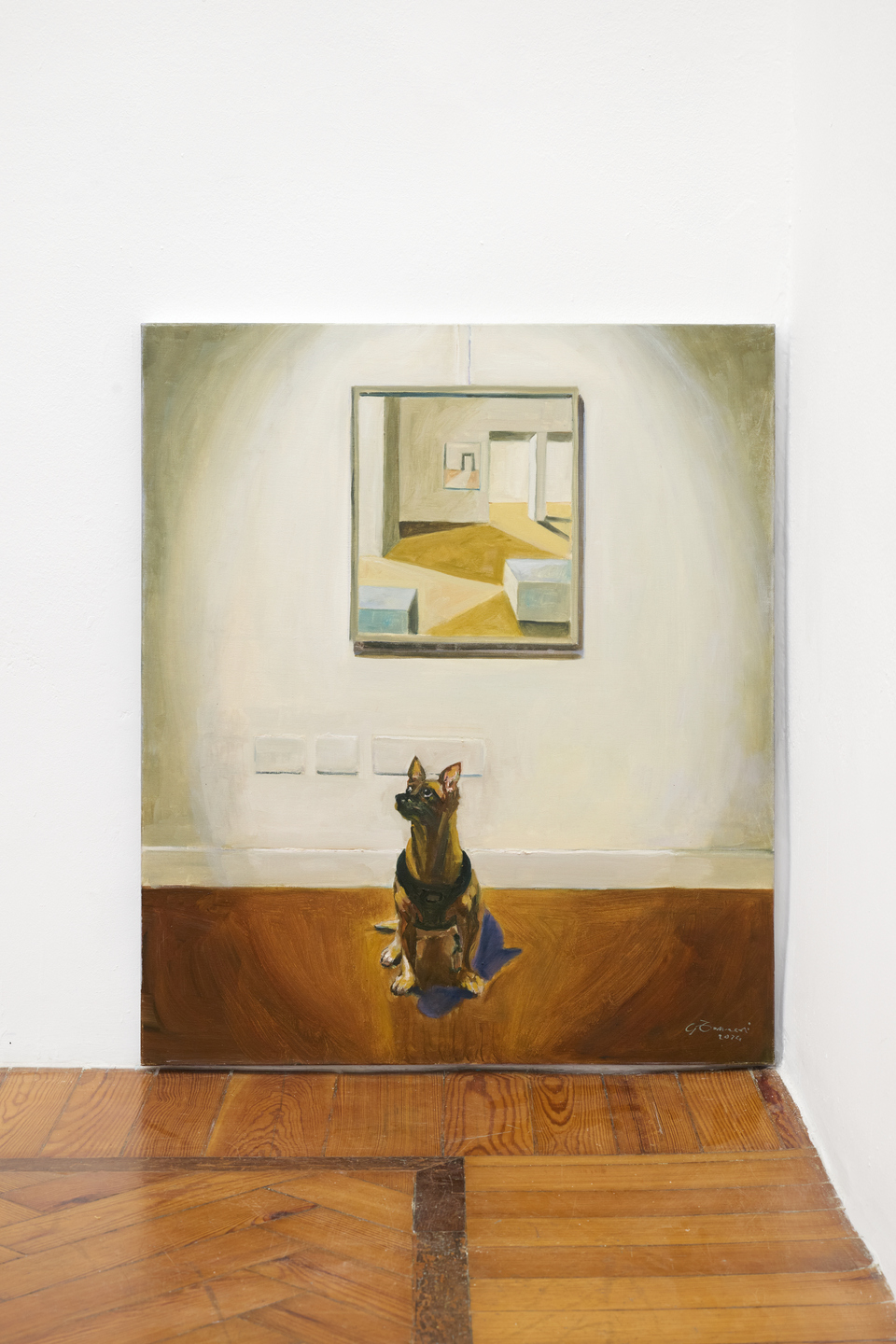
La pittura di Gaetano Tommasi (Lizzano, 1973) indaga la memoria e la vita silenziosa di oggetti, interni, figure umane e animali. Il suo mondo così affollato di personaggi tratti dalla sua vita quotidiana – piene di situazioni domestiche, affetti, come luoghi a lui familiari – si inscrive all’interno di quella estesissima deriva pittorica definita generalmente “realismo contemporaneo” – una scelta figlia di grande sensibilità e sempre al di sopra di qualsiasi trend. Tommasi trova lo spazio per un’indagine ancora più sottile, non limitandosi a restituire ciò che vede, ma cercando di catturare ciò che resta nella sua mente; quell’unica immagine o scena, per lui, degna di essere salvata da quella giornata appena trascorsa. Frequente, nei suoi dipinti, è la presenza di animali domestici: il proprio gatto, il proprio cane o altri animali, spesso contestualizzati in situazioni differenti – dalle più intime alle più concettuali – sono lì a condividere con l’uomo (e come l’uomo) sentimenti come la malinconia, la stanchezza, l’attesa; atmosfere appannate, sospese tra l’aria calda del sud Italia e le pareti asettiche di una galleria.
Romane de Watteville
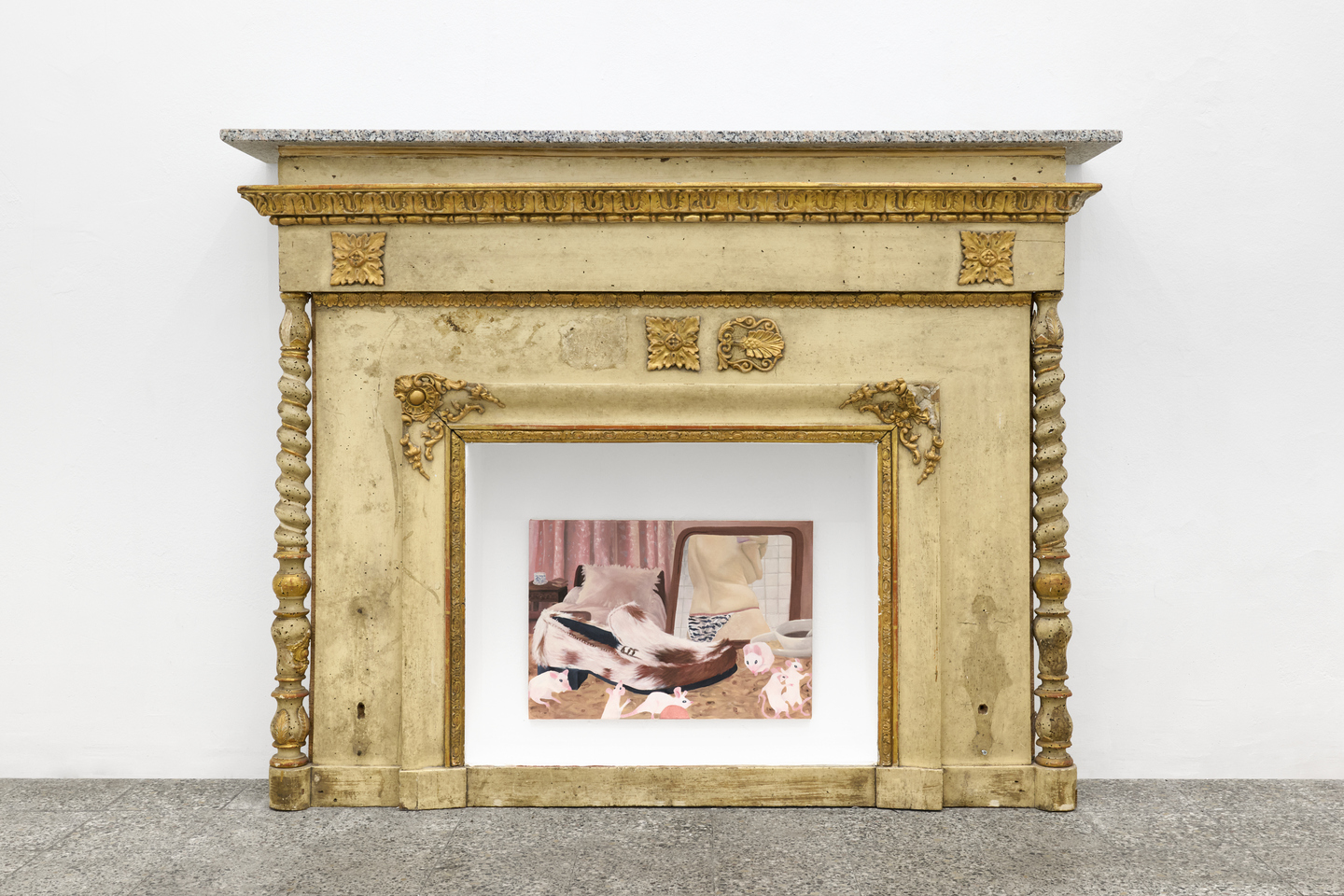
Il lavoro di Romane de Watteville (Switzerland, 1993) si sviluppa attraverso la scelta di una pittura dichiaratamente figurativa, che dalla tela sfocia al disegno come in composizioni sequenziali e fortemente narrative simili a delle scenografie. Nei suoi dipinti troviamo storia dell'arte, cinema, moda, cibo mai scollegati da contesti autobiografici o fortemente legati alla sua cultura generazionale. In questi scenari che mischiano estetiche e cromie soft-kitsch a situazioni (spesso) dalla cifra surrealista e ironica, il ritratto e l’autoritratto sono sempre in primo piano ...ma mai nella loro risoluzione canonica: i tagli prospettici scelti dall’artista travalicano la tradizione sfociando piuttosto nella dimensione cinematografica sia per dinamicità delle scene – che sembrano spesso dei veri e propri “fermi immagine” – che per la scelta del punto di vista; come se l’obiettivo di una telecamera si muovesse liberamente nello spazio, tra zoom-in e “inquadrature” strategiche e vertiginose. Attraverso questa lente l’artista cattura ricordi e impressioni emotive arricchendole, talvolta, di personaggi d’invenzione (come piccoli topi danzanti o raffigurazioni mitologiche), conferendo quell’ ulteriore tocco fantasy che rende le sue immagini confidenziali e inquietanti al tempo stesso.
Sebastiano Zafonte
Non c’è opera nel quale Sebastiano Zafonte (Petralia Sottana, 1994) non interagisca con il mondo animale; anzi, in una complessa trama di materiali sintetici, naturali e “readymade” – orchestrati sempre “senza gerarchie”, così tiene a sottolineare l’artista – l’animale è addirittura il protagonista... anzi più esattamente il co-protagonista; quel soggetto che in una sceneggiatura funge spesso da fondamentale contrappunto, specchio, alleato o antagonista del protagonista: ruolo, qui, interpretato senza alcun dubbio dall’Uomo, nella sua accezione più universale. Zafonte strumentalizza la sua “fauna”, per parlare di noi, rendendola uno strumento critico, un bizzarro dispositivo con il quale far emergere la tragicomica assurdità dell’esistenza umana. Contraddistinti spesso da un’estetica tra rurale/primordiale nel quale passato e presente – come anche vita e morte – si fondono, le sue opere non scadono mai sul versante pessimistico o creepy anzi, al contrario, ci parlano sempre con un tono ironico.
*
Studiolo is pleased to announce the exhibition “bestiarium”, a group show featuring artists Thomas Berra, Anita Dal Sasso, Lucia Leuci, Elisabetta Marino, Maude Maris, Eliott Paquet, Gaetano Tommasi, Romane de Watteville and Sebastiano Zafonte;
Interweaving painting, sculpture, and drawing, the exhibition investigates the relationship between the anthropic and the animal worlds: a primordial bond that humans — from the Paleolithic to today, passing through an infinite repertoire of pictorial, literary, musical, and cinematic references — have mysteriously felt the need to share and represent.
Reality and cryptozoology (a science linked to animals whose existence is hypothesized through testimonies, legends, and clues) blend together, showing how the animal — whether a living body or a mythical projection — becomes not only the subject of a daily or imagined proximity but rather a complex emotional “device” in which psychological and symbolic drifts, dreams, and projective needs condense; in these roles, creatures abandon their biological nature to become alter-egos, metaphors, models of purity to which, ideally, one seeks to connect.
On show are nine contemporary conjugations of this special relationship — nine examples of how (and why) artists today continue to consider them an essential component of their research:
…anthropomorphizing them, as in the case of Thomas Berra and Elisabetta Marino, whose figures on view — whether the feline subjects of byzantine reminiscence in the first, or the two dogs playing a typical childhood game from Palermo in the second — tend toward a formal and social union between the two worlds;
…making them surreal and fairy-like presences, as in the paintings of Anita Dal Sasso and Romane de Watteville; fundamental constructors of narratives or fragments of the self;
…re-establishing their collective reputation, as in the case of Eliott Paquet’s mouse: from parasitic and decaying symbol to Dostoevskian metaphor of purity;
…considering them the true winners in the anti-speciesist struggle, as in Sebastiano Zafonte’s work, with his barn owl that, with mockery, observes the glass fragments of a human femur (a metaphor for a fragile humanity, no longer capable of bearing its own weight);
…placing them, sentimentally and anthropologically, on the same level as humans, as in the works of Gaetano Tommasi and Maude Maris, or as in the two ringed parakeets by Lucia Leuci which, perched on an imaginary trolley-man walking through Milan, become one, merging their stories into a single and universal one.
To every artist there always corresponds a bestiary of their own — intimate and unique!
#
Thomas Berra
The work of Thomas Berra (Milan, 1986) has always been inseparably linked to painting and to the concept of resistance; a theme which, even before taking hold of the subjects of his paintings, represents for the artist a true statement of life: Resistant is the nature that surrounds us, which regenerates itself stubbornly despite our overbearing actions;
Resistant is the presence, in our lives, of dreams and images that are generated and appear to us every day; Resistant is his approach to the practice of painting — tireless, daily, compulsive — a special summation that every day flows onto canvases of small or very large dimensions, onto paper, or onto supports of any other kind. The world represented by Berra is not anthropocentric but rather ecocentric, where the vegetal element — an almost constant presence in his work — joins with mystical scenarios animated by fairy-tale subjects, formless beasts, horses, chimeras, but also by humans; an inseparable whole, romantically suspended in a oneiric atmosphere.
Anita Dal Sasso
The works of Anita Dal Sasso (Rome, 2000) are like portals opened onto the chaos of an interior landscape; visions produced by our mind and nourished by dreams, thought, myth and tradition, as well as by literature, art history, cinema, and theatre. It is precisely the latter — an integral part of her professional training — that gives each canvas that particular complexity reserved for scenographic works, where the static nature of a single backdrop is often, paradoxically, required to condense the dynamism of several scenes. Her compositions are therefore babel-like iconographic accumulations where a surrealism of Ernst-like taste (the most decidedly oneiric and psychological one) joins with late Baroque plasticities, Dionysian and Symbolist visions, and even circus masks and Fellini-esque caricatures; as in a dream, there is no real hierarchy among the figures — all slip across different planes and scales, interlocking with one another, contributing to making us perceive the whole as being in continuous movement… without protagonists or specific stories to tell.
Lucia Leuci
The practice of Lucia Leuci (Bisceglie, 1977) unfolds through drawing, painting, sculpture, and installation, considered primary and instinctive expressive forms, archetypal manifestations that transcend individual choice. In her works, the performative act is configured as an oscillation between intimate manual skill and collective sociality, understood as the sharing and transmission of knowledge and gestures. Through juxtapositions of contrasting elements — often chosen for their emotional resonance, even by way of minimal details — and the use of materials that are as artificial as they are organic, Lucia Leuci investigates the themes of maternity, of autochthonous identities, and, on an even broader spectrum, the relationship between humans and the landscape that surrounds them. The city and its peripheries emerge as primary settings, places of passage but also of belonging, backdrops in which human stories often intertwine with faunistic and marginal dimensions, nourishing imaginaries with a strong narrative character — hybrid, unexpected, and fascinating.
Elisabetta Marino
In the works of Elisabetta Marino (Palermo, 1989), reality always rises to the dimension of myth and vice versa. Within what the artist herself defines as “a non-linear narrative structure”, what actually takes shape is a coherent programmatic position that persists in each of her works: to construct a meta-language that seems to comfort us through its apparent familiarity (aided by the use of a particularly optimistic palette and a decisive graphic sign) but which, at the same time, proves to be ambiguous, enigmatic, and placed on an indeterminable timeline. Archaic elements, sculptural iconographies, echoes of chivalric epics as well as the everydayness of human and animal attitudes — never devoid of latent tension — clash with a graphic imprint of saturated tones, balancing between naïf aesthetics, primitivism, and a neo-metaphysical landscape reminiscent of Salvo-like imagery. A love for stratification — and undoubtedly for her place of origin, Palermo and Sicily, “stratified” par excellence — which, in front of one of her works, forces us not to be simple observers but rather archaeologists of the image.
Maude Maris
On her personal website Maude Maris (France, 1980) cites these exact words: “Everything starts from a place, I live there. A vegetal enclosure, between forest and river, surrounded by immense pastures. Nature, domesticated or not, emerging or disappearing. Trees, flowers, animals are serious subjects, never symbolic. I materialize their presences through painted masses. I see them. They are no longer things, but a community of living beings. And we are part of it”. For ten years, Maris has followed a pre-painting process based on the staging of small gathered objects, arranged according to personal compositional rules, in an attempt to classify the world in a systemic, fluid, and shifting way. After having explored the mineral realms and their geometries, her work continues today with an equally radical and exclusive attention toward the living–animal world; her paintings express the density of moments and places connected to these subjects with an extremely spontaneous painting full of tender gravity.
Eliott Paquet
Eliott Paquet (Paris, 1990) explores in his works the drifts of the difficult relationship between craftsmanship and the industrial process, between the methods we commonly consider “classical” and those which, since the mid-1700s, have progressively changed our lives up to today. His hybrid language, which combines sculpture, installation, and painting, therefore arises from a reflection on the theme of transitions — those historical and symbolic ones that have cyclically characterized human epochs. From the upheavals of the industrial revolution to the contradictions of modernism, he seeks to underline and remind us how every progress is inevitably accompanied by the loss of something else — renunciations that are, in fact, real “social traumas,” and whose memory is often worth defending. The exhibitions “Ceci Tuera Cela” held at Atelier Poush in Paris in 2024 and “HIDE & SICK (Ceci Tuera Cela part II)” at Studiolo bureau, Milan, are the most recent outcomes of this research: respectively, the first inspired by the passage from the symbolic function of monumental architecture/sculpture to the invention of printing, and the second by the shift from the canons of classical/19th-century construction systems to those of modernism.
Gaetano Tommasi
The painting of Gaetano Tommasi (Lizzano, 1973) investigates memory and the silent life of objects, interiors, human figures, and animals. His world, so crowded with characters drawn from his everyday life — full of domestic situations, affections, and places familiar to him — is inscribed within that very extensive pictorial drift generally defined as “contemporary realism,” a choice full of great sensitivity and always above any trend. Tommasi finds the space for an even more subtle investigation, not limiting himself to rendering what he sees, but seeking to capture what remains in his mind: that single image or scene which, for him, is worthy of being saved from the day just passed. Frequent in his paintings is the presence of domestic animals: his own cat, his own dog, or other animals, often contextualised in different situations — from the most intimate to the most conceptual — are there to share with the human (and like the human) feelings such as melancholy, fatigue, waiting; blurred atmospheres, suspended between the warm air of southern Italy and the aseptic walls of a gallery.
Romane de Watteville
The work of Romane de Watteville (Switzerland, 1993) develops through the choice of a deliberately figurative painting, which from the canvas flows into drawing, as in sequential and strongly narrative compositions similar to scenographies.In her paintings we find art history, cinema, fashion, food — never disconnected from autobiographical contexts or strongly linked to her generational culture. In these scenarios that mix soft-kitsch aesthetics and chromaticities with situations (often) of a surrealist and ironic character, portrait and self-portrait always find a place in the foreground... but never in their canonical form: the perspective cuts chosen by the artist go beyond tradition, instead flowing into the cinematic dimension, both for the dynamism of the scenes — which often seem like real “freeze-frames” — and for the choice of point of view; as if a camera lens were moving freely through space, between zoom-ins and strategic, dizzying “framing”. Through this lens, the artist captures memories and emotional impressions, sometimes enriching them with invented characters (such as small dancing mice or mythological representations), giving that additional fantasy touch that makes her images both intimate and unsettling at the same time.
Sebastiano Zafonte
There is no work in which Sebastiano Zafonte (Petralia Sottana, 1994) does not interact with the animal world; indeed, within a complex weave of synthetic, natural, and “readymade” materials — always orchestrated “without hierarchies,” as the artist is keen to underline — the animal is actually the protagonist… or more precisely, the co-protagonist; that subject which, in a screenplay, often serves as a fundamental counterpoint, mirror, ally, or antagonist to the protagonist: a role here interpreted, without any doubt, by the Human, in its most universal sense. Zafonte instrumentalises his “fauna” in order to speak about us, making it a critical tool, a bizarre device through which to bring out the tragicomic absurdity of human existence. Often characterised by an aesthetic between rural/primordial, in which past and present — as well as life and death — merge, his works never fall into pessimism or creepiness; on the contrary, they always speak to us in an ironic tone.